Ready to Get Started?
We’re here to help. Schedule a consultation today to discuss treatment options.
As facial volume naturally declines over time, structural hollows, fine lines, and sagging can alter your natural contours. Dermal fillers offer a safe, versatile, and non-surgical solution to restore lost fullness, smooth deep wrinkles, and enhance key facial features. However, with various cosmetic filler formulations available today, ranging from soft hyaluronic acid gels to collagen-stimulating biostimulators, choosing the right product requires an understanding of your specific facial anatomy and aesthetic goals. Matching the appropriate density and cross-linking technology to targeted facial zones ensures subtle, balanced, and natural-looking rejuvenation.
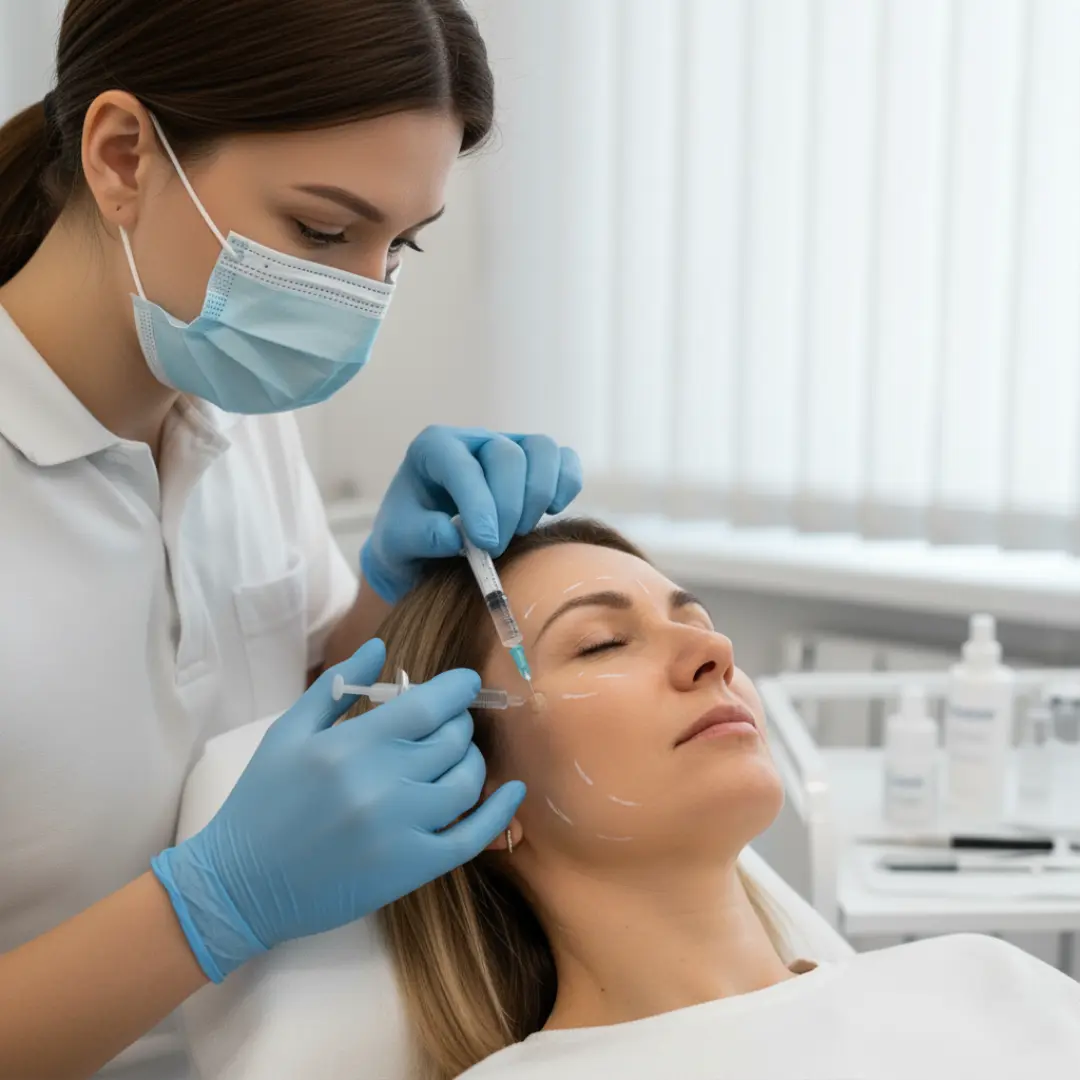
Dermal fillers are medical-grade injectable gels formulated to replace lost structural volume, smooth dynamic folds, and enhance facial symmetry. Facial volume depletion typically results from a combination of bone reabsorption, fat pad migration, and reduced natural collagen production.
When strategically placed into different anatomical depths, from superficial dermal layers down to the periosteum (bone surface), fillers re-establish lost structural support. They lift sagging tissue, smooth static lines like nasolabial folds, and refine facial profiles.
To explore our complete menu of injectable treatments, visit the officialArizona MedLaser website.
Not all fillers are created equal. Formulations differ by primary active ingredient, molecular density, lift capacity (G-prime), and longevity.
Hyaluronic acid is a naturally occurring sugar molecule in human tissue that binds up to 1,000 times its weight in water. HA fillers are popular because they provide immediate volume, keep skin plump, and can be dissolved using the enzyme hyaluronidase if adjustments are needed.
Instead of physically occupying space to add immediate volume, biostimulators like Sculptra act as collagen-induction seeds. Once injected into the deep tissue layer, micro-particles trigger subtle inflammatory responses that encourage your body to produce fresh collagen fibers over several months.
According to clinical research published by theNational Institutes of Health, hyaluronic acid remains the global standard for non-surgical facial reshaping due to its biocompatibility and reversible safety profile.
Choosing the ideal filler depends on the degree of movement, skin thickness, and structural support required in each facial zone.
| Treatment Zone | Primary Goal | Recommended Filler Characteristic | Average Duration |
| Lips & Lip Lines | Soft hydration, subtle fullness, definition | Highly flexible, low-density HA gel | 6 to 12 months |
| Cheeks & Mid-Face | Lifting sagging tissue, restoring contour | High-density, structured HA or biostimulator | 12 to 18 months |
| Under-Eyes (Tear Troughs) | Softening hollow shadows, brightening eyes | Thin, smooth, low-swelling HA gel | 9 to 12 months |
| Jawline & Chin | Defining profile, balancing facial proportions | Firm, rigid HA gel or deep biostimulator | 12 to 24 months |
| Smile Lines (Nasolabial) | Smoothing deep folds around the mouth | Medium-density, flexible HA gel | 9 to 12 months |
To learn more about aesthetic injectable safety guidelines, consult resources provided by theAmerican Academy of Dermatology.
Proper placement requires detailed knowledge of facial anatomy, arterial distribution, and muscular movement. Choosing an experienced medical injector ensures natural, balanced symmetry while reducing the risk of vascular complications.
To minimize post-injection bruising and localized swelling:
While hyaluronic acid fillers deliver instant gratification, slight localized swelling is expected for 3 to 7 days. Final settled results appear at approximately 2 weeks post-treatment once the gel integrates with surrounding tissue.
Regulatory safety facts regarding dermal filler medical devices can be reviewed on the official site of theU.S. Food and Drug Administration.
Most patients report minimal discomfort. Fillers are formulated with integrated lidocaine (a localized numbing agent), and topical numbing cream is applied prior to injection to ensure a comfortable experience.
Botox relaxes dynamic muscles that cause movement-based wrinkles (like forehead lines or crow’s feet). Dermal fillers restore lost structural volume and fill static creases visible when your face is completely relaxed (like cheek hollows or deep smile lines).
Hyaluronic acid fillers can be dissolved using an injectable enzyme called hyaluronidase. The enzyme breaks down the synthetic sugar matrix within hours, safely returning your skin to its original baseline.
Downtime is minimal. You may experience mild swelling, localized tenderness, or minor bruising at injection sites for a few days, but you can return to normal routine activities immediately.
Syringe requirements vary based on anatomical volume loss and personal goals. Subtle lip or under-eye treatments often require 1 syringe, whereas comprehensive cheek, jawline, or full-face rejuvenation may require 2 to 4 syringes spread across structured visits.
Ready to enhance your natural features with a personalized injectable plan? Schedule your detailed aesthetic evaluation with the medical team atArizona MedLaser today!
We’re here to help. Schedule a consultation today to discuss treatment options.
We're here to help. Schedule a consultation today to discuss treatment options and look your very best.
Book Now
Copyright © 2026 All Rights Reserved Financing | Privacy Policy | HIPAA | Terms of Service