Ready to Get Started?
We’re here to help. Schedule a consultation today to discuss treatment options.
Quick Answer
Choose a Hydro Glow Facial when the goal is immediate hydration, gentle exfoliation and no downtime; choose a chemical peel when you need to resurface deeper concerns such as acne scarring, melasma or accumulated sun damage. Hydro Glow uses mechanical fluid infusion to cleanse, exfoliate and saturate the skin in a single session, while a peel applies acids that trigger controlled shedding over several days. In Arizona’s dry, high-UV climate, Arizona MedLaser often alternates the two: Hydro Glow for maintenance, peels for correction.
Achieving smooth, luminous skin in Arizona’s harsh desert environment requires a proactive clinical strategy. Constant exposure to low humidity, high UV radiation, and relentless air conditioning severely degrades the epidermal barrier, leading to premature fine lines, stubborn dullness, and persistent clogged pores. When deciding on professional resurfacing treatments, many individuals find themselves choosing between a modern Hydro Glow Facial and traditional chemical peels.
At Arizona Medlaser, our certified medical aesthetic team helps clients navigate these choices by evaluating individual skin types, downtime tolerances, and long-term aesthetic goals. Understanding the distinct mechanisms, recovery profiles, and ideal applications of each procedure ensures you select the exact treatment your skin needs to thrive.
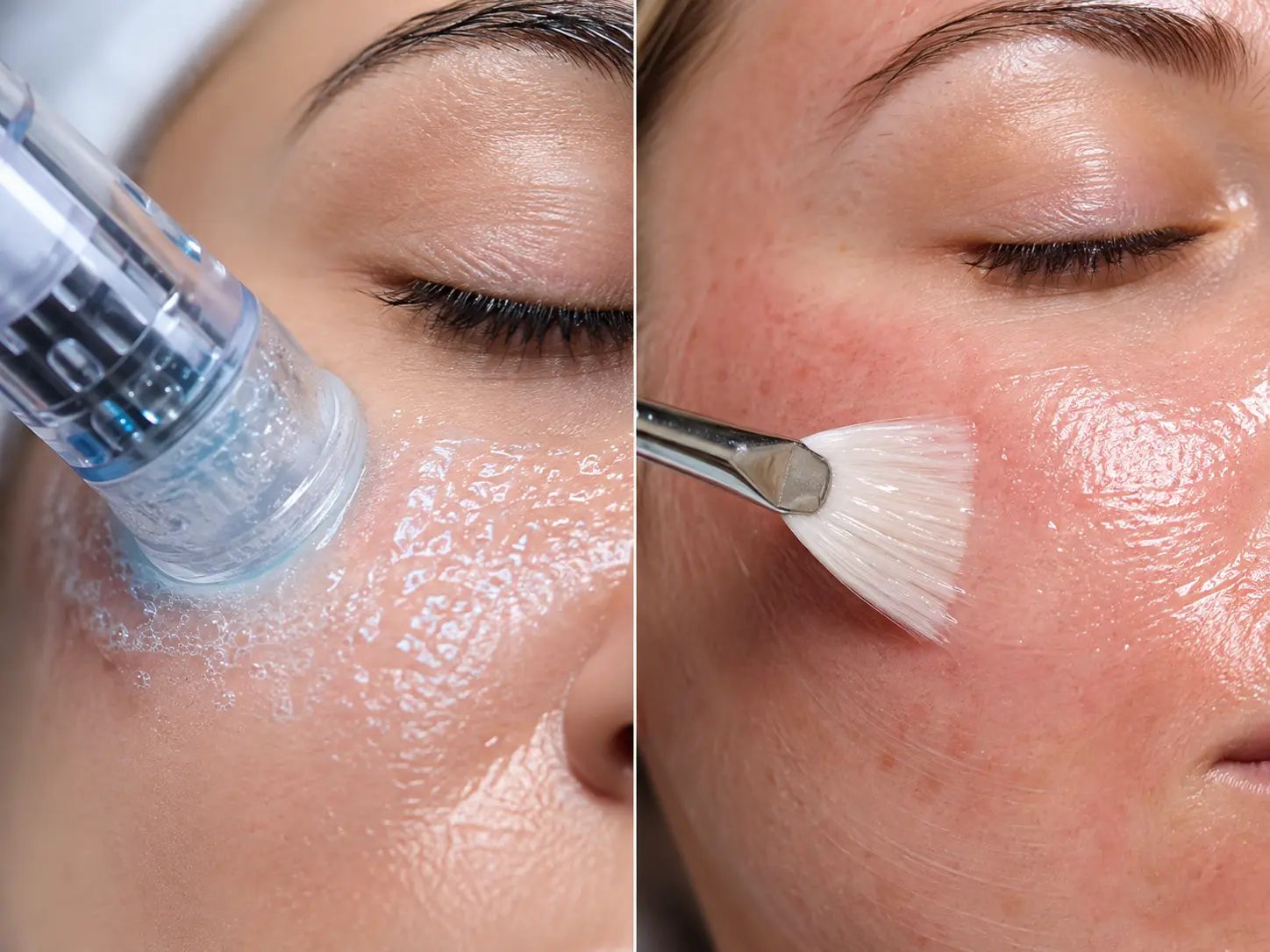
While both procedures aim to remove damaged surface cells and reveal fresh tissue beneath, they rely on entirely different physiological mechanisms to achieve cellular renewal.
The Hydro Glow Facial utilizes non-invasive hydro-dermabrasion technology that pairs gentle fluid dynamic suction with vortex-driven serum infusion. Instead of using harsh physical abrasives or strong peeling agents, a specialized wand glides over the skin to clear congestion, perform painless extractions, and drive deeply hydrating solutions below the surface.
This immediate physical cleansing mechanism works without disrupting the delicate stratum corneum, making it exceptional for counteracting Transepidermal Water Loss (TEWL) in arid climates.
Chemical peels rely on topical acid solutions, such as glycolic, lactic, salicylic, or trichloroacetic acid (TCA), to induce controlled chemical micro-injury across the skin’s surface. These acidic solutions lower the skin’s pH, breaking down the desmosomes (protein bonds) holding dead skin cells together.
Over the days following application, the damaged outer layers slough off, stimulating rapid cellular turnover and forcing deeper structural repair. According to clinical documentation archived by the National Institutes of Health (NIH), controlled chemical resurfacing triggers neocollagenesis (new collagen synthesis) within the dermal matrix, making peels highly effective for deep structural corrections.
| Performance Metric | Hydro Glow Facial | Chemical Peels |
| Primary Mechanism | Fluid dynamic hydro-vortex extraction & serum infusion | Acid-induced chemical exfoliation & cellular turnover |
| Main Target Concerns | Immediate dehydration, surface dullness, clogged pores | Deep hyperpigmentation, severe sunspots, fine lines |
| Typical Downtime | Zero downtime; immediate radiant glow | 3 to 7 days of active flaking, peeling, and mild redness |
| Skin Type Suitability | Excellent for all skin types, including highly sensitive skin | Requires customized acid selection based on Fitzpatrick skin type |
| Pore Extractions | Painless, vacuum-assisted vortex extractions included | Primarily chemical clearing; manual extractions required separately |
The efficacy of each treatment depends heavily on the active ingredients used during application.
Clinical guidance published by the American Academy of Dermatology (AAD) emphasizes that non-ablative hydro-exfoliation offers consistent surface renewal with minimal risk of post-inflammatory hyperpigmentation, whereas chemical peels require careful post-treatment sun avoidance to protect newly exposed tissue.
Choosing between a Hydro Glow Facial and a chemical peel depends on your immediate skin condition, schedule, and desired outcomes.
For many individuals, the choice is not mutually exclusive. Combining hydro-dermabrasion and chemical resurfacing into a strategic, staggered routine often delivers optimal clinical outcomes.
At Arizona Medlaser, our aesthetic specialists frequently combine or alternate Hydro Glow treatments with advanced Skin Treatments to target both surface hydration and deeper tissue concerns. Clearing away environmental debris with a Hydro Glow session prepares the skin to receive light chemical peels or energy-based modalities far more evenly. To learn more about selecting options tailored to desert skin, read our guide on Top Treatments for Dry Skin.
During a Hydro Glow Facial, you will feel a refreshing, cooling sensation as the hydro-wand glides across your face. You can reapply makeup immediately and return to daily activities with a noticeably supple, glowing complexion.
During a chemical peel, you may experience a temporary warm, tingling sensation as the acid solution activates. Over the following week, your skin will gradually shed its outer layers, requiring diligent application of soothing moisturizers and broad-spectrum mineral SPF.
Ready to discover whether a Hydro Glow Facial or a customized chemical peel is the ideal match for your skin goals? Schedule your personalized skin consultation at Arizona Medlaser today, and let our expert clinical team design a tailored treatment plan to restore your natural radiance.
We’re here to help. Schedule a consultation today to discuss treatment options.
we're here to help Sechedule a consulation today to discuss treatment options and look your very best.
Book Now
Copyrights © 2026 All Right Reserved Financing | Privacy Policy | HIPAA | Terms of Service