Quick Answer
Is laser hair removal safe for sensitive skin?
Yes, and it is usually gentler than the alternatives. Shaving and waxing cause repeated mechanical trauma, ingrown hairs and folliculitis; laser energy targets pigment in the follicle itself and leaves surrounding tissue intact. Sensitive skin does require the right protocol: a patch test first, a longer wavelength such as Nd:YAG where reactivity is high, conservative fluence settings, and contact cooling throughout. Stop retinoids and acids a week beforehand, and keep the treated area out of the Scottsdale sun afterwards.
Living in beautiful Scottsdale, Arizona, means enjoying a vibrant, active lifestyle filled with year-round sunshine, resort pool days, and outdoor adventures. In a city where shorts, sundresses, and swimsuits are wardrobe staples for the majority of the year, keeping your skin smooth and hair-free is a top priority. However, if you have sensitive or highly reactive skin, the endless cycle of hair removal can quickly become a painful and frustrating chore.
For individuals prone to skin irritation, traditional hair removal methods frequently leave behind a trail of redness, angry bumps, and ingrown hairs. You might have considered permanent hair reduction but hesitated, wondering if the intense energy of a laser would only aggravate your delicate skin further. The excellent news is that modern aesthetic technology has evolved dramatically. Today, professional laser hair removal is not only safe for sensitive skin, but it is actually one of the most effective ways to heal, protect, and restore your complexion. By understanding the science and following professional best practices, you can finally achieve lasting smoothness without the painful side effects.
Why Traditional Hair Removal Fails Sensitive Skin
To appreciate why laser treatments are uniquely beneficial for reactive skin, we must first look at the damage caused by your current hair removal routine. If your skin is easily irritated, you are likely trapped in a cycle of constant mechanical and chemical inflammation.
When you shave, the razor blade does not just cut the hair; it also aggressively scrapes away the uppermost protective layer of your epidermis. This repetitive friction creates microscopic tears that lead to the all-too-familiar razor burn, severe redness, and persistent ingrown hairs. For those with thick or coarse hair, this daily ritual often means waking up to painful, inflamed skin before the day has even begun.
Waxing is often even more traumatic for sensitive skin types. The hot resin binds to the skin and aggressively rips off live skin cells along with the hair root, frequently causing localized trauma, prolonged inflammation, and long-lasting hyperpigmentation that can take months to fade. For individuals suffering from contact dermatitis or folliculitis (the painful inflammation of hair follicles), these harsh methods keep the skin in a chronic state of distress. The ultimate solution is to stop traumatizing the surface of your skin altogether.
How Laser Technology Protects Delicate Skin
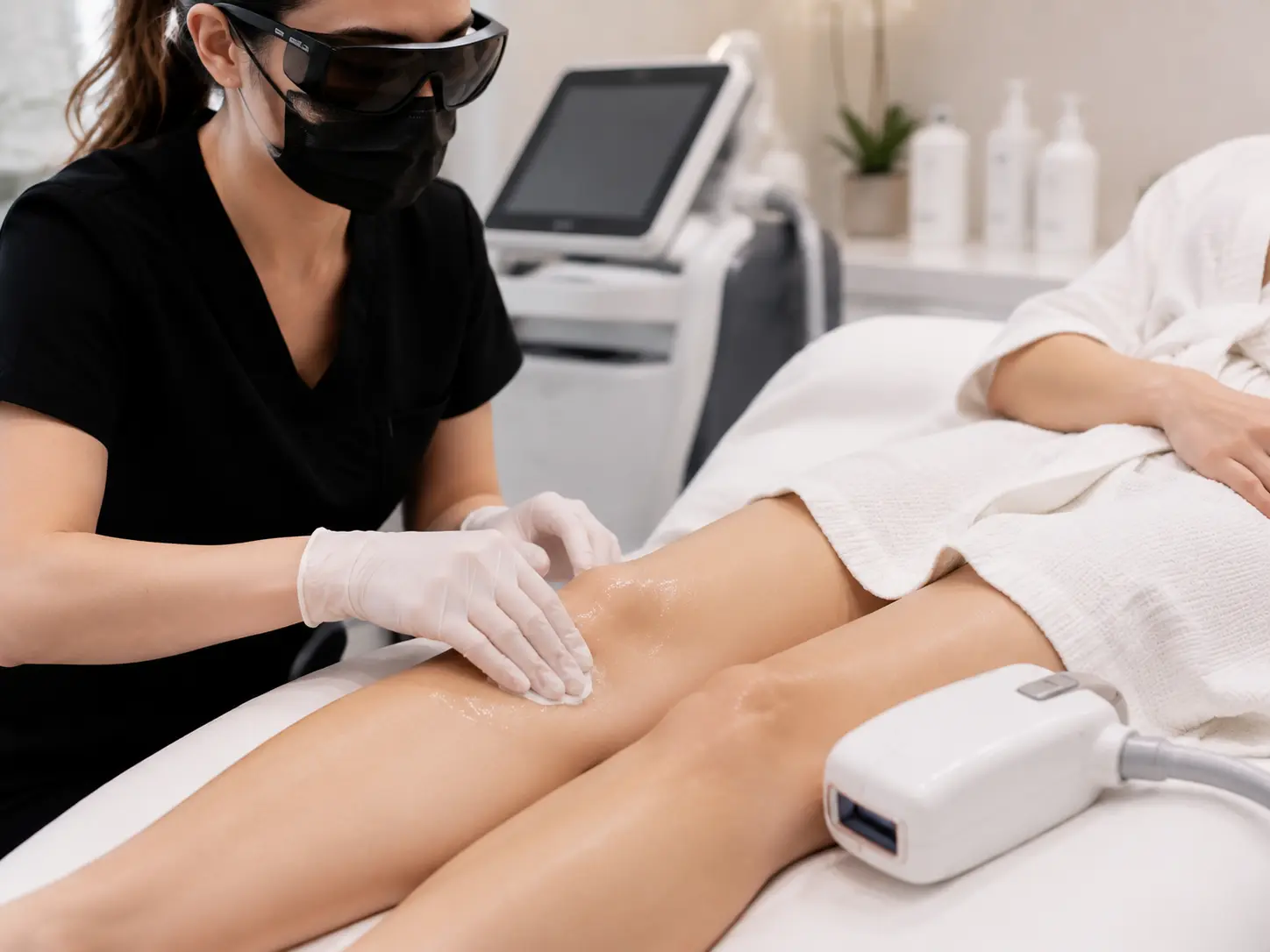
Unlike shaving or waxing, which cause surface-level trauma, laser hair removal safely bypasses the epidermis entirely. The technology works by emitting highly concentrated beams of light energy that are specifically calibrated to target the melanin (pigment) inside the hair follicle. The pigment absorbs this light, converts it to heat, and destroys the follicle’s ability to grow hair, all without damaging or tearing the surrounding skin tissue.
Modern medical-grade lasers, like the advanced Diode lasers we use, are specifically engineered with sensitive skin in mind. They feature advanced integrated cooling mechanisms that immediately soothe the surface of the skin as the laser pulses. This dramatic contrast ensures that the underlying follicle reaches the necessary heat to stop hair growth, while the surface of your skin remains comfortably cool and protected from thermal irritation.
According to safety guidelines from the American Academy of Dermatology (AAD), laser hair reduction is a remarkably safe and effective procedure when performed by trained professionals. Because the treatment is non-invasive, precise, and completely eliminates the daily friction of a razor blade, it is rapidly becoming the gold standard for individuals who cannot tolerate the aggressive nature of traditional hair removal.
Best Practices for Preparing Sensitive Skin in Scottsdale
While the laser itself is safe, sensitive skin requires strategic preparation to ensure a completely flawless and comfortable experience. Because the Scottsdale sun is intensely strong, managing your skin’s exposure to ultraviolet rays before your appointment is absolutely critical.
You must ensure your skin is in its calmest possible state before your session begins. It is vital to avoid all prolonged sun exposure and tanning beds for at least two weeks prior to your appointment. Treating sunburned or heavily tanned skin drastically increases the risk of adverse reactions like blistering or hyperpigmentation.
Additionally, if you use active skincare ingredients on the treatment area, such as retinoids, glycolic acid, or salicylic acid, you must pause these products for three to five days before your session. These powerful ingredients naturally thin the skin’s protective barrier, which can heighten sensitivity during the laser treatment. Finally, you must abandon all waxing and plucking at least four weeks before your session. The laser needs the hair root intact to effectively destroy it. Simply arrive at your appointment with a clean, fresh shave from the night before.
Post-Treatment Care for Lasting, Soothing Results
Your journey to flawless skin does not end the moment you step out of our clinic. How you care for your skin in the crucial 48 hours following your treatment directly impacts your comfort and recovery speed. It is entirely normal for the treated area to display mild redness and a sensation similar to a mild sunburn, which is a natural histamine response indicating the treatment was successful.
Because laser technology relies on heat to destroy the follicle, your skin will retain some residual thermal energy. Your primary goal during the first two days is to keep the skin cool and calm. Apply pure, fragrance-free aloe vera gel or a gentle cool compress to soothe the area. Avoid using thick, heavy creams or oil-based lotions, as these can trap the heat beneath the surface of the skin and lead to unwanted inflammation or breakouts.
Furthermore, you must actively avoid adding any additional heat to your body. Skip the hot showers, saunas, steam rooms, and hot tubs. If you love to hike Camelback Mountain or attend intense hot yoga classes in Scottsdale, you will need to pause those cardiovascular workouts for 48 hours. Heavy sweating contains bacteria that can easily enter the sensitive, freshly treated follicles, leading to painful infections.
During the shedding phase, which occurs one to three weeks after your appointment, the disabled hairs will slowly push their way out of the follicle. It is crucial that you allow this process to happen naturally. Do not pluck or tweeze these hairs, as doing so disrupts the growth cycle required for your next session. Most importantly, diligently apply a high-quality, broad-spectrum sunscreen anytime you step out into the Arizona sun to protect your vulnerable skin from UV damage.
Why Choose a MedSpa Over At-Home Devices
With the rise of at-home IPL (Intense Pulsed Light) devices, many people wonder if they can achieve the same results in their own bathrooms. For sensitive skin types, DIY hair removal is a significant risk. At-home devices lack the advanced cooling systems found in professional medical lasers, making them far more painful and likely to cause burns, scarring, or hyperpigmentation on reactive skin.
Professional medical spas utilize highly calibrated lasers that can be adjusted to your exact skin tone, hair thickness, and sensitivity level. Having a trained, licensed laser technician assess your skin ensures that the energy levels are effective enough to permanently destroy the hair follicle, but gentle enough to keep your skin perfectly safe.
Embrace Smooth, Irritation-Free Skin at Arizona MedLaser
You do not have to live with the daily discomfort of razor burn, painful ingrown hairs, and chronically irritated skin. If you are ready to break free from harsh hair removal methods and embrace the lasting, soothing benefits of medical-grade technology, our expert team is here to help. At Arizona MedLaser, we customize gentle, highly effective treatment plans tailored specifically to your unique skin profile. Take the first step toward a lifetime of effortless, irritation-free smoothness by scheduling your private consultation at our Scottsdale medical spa location. Discover how luxurious, safe, and truly transformative permanent laser hair removal can be for your sensitive skin.
Ready to Get Started?
We’re here to help. Schedule a consultation today to discuss treatment options.
Frequently Asked Questions
Why does waxing cause so many problems for sensitive skin?
Hot wax grips the skin and tears away living skin cells as well as the hair root. For reactive skin that often means localised trauma, lingering inflammation and dark marks that can take months to fade, and it keeps conditions like folliculitis or contact dermatitis in a constant flare.
Why do I need to pause workouts after laser hair removal?
Heat and heavy sweating are the two things freshly treated follicles don't need. Sweat carries bacteria that can get into the open follicles and cause infection, so pause hot yoga, hikes and other hard cardio for 48 hours, and avoid hot tubs, steam rooms, saunas and hot showers too.
Can I pluck the hairs that shed after my session?
No. In the one to three weeks after treatment, the disabled hairs push out of the follicle on their own. Plucking or tweezing them interferes with the growth cycle your next session relies on, so let them fall out naturally.
Is redness after laser a bad sign on sensitive skin?
No, mild redness and a feeling like a mild sunburn are normal. They are a natural histamine response showing the treatment worked. Keep the area cool for the first two days with fragrance-free aloe vera or a cool compress, and avoid heavy creams that trap heat.
Why is a sunburn or tan a problem before laser treatment?
Treating sunburned or heavily tanned skin raises the risk of reactions such as blistering or dark patches, especially on sensitive skin. That is why you should stay out of prolonged sun and avoid tanning beds for a minimum of two weeks before your appointment, which matters under Scottsdale's strong sun.