Ready to Get Started?
We’re here to help. Schedule a consultation today to discuss treatment options.
Laser hair removal provides long-term freedom from daily shaving, painful waxing, and stubborn ingrown hairs. However, achieving smooth, hair-free skin safely depends heavily on following a structured post-treatment care routine. Immediately following a laser session, treated hair follicles experience temporary thermal stress, often resulting in mild redness and slight swelling known as erythema and follicular edema. Adopting proper post-care habits protects your delicate skin barrier, lowers the risk of post-inflammatory hyperpigmentation, and accelerates skin recovery. By keeping the skin cool, avoiding direct heat and UV radiation, and staying properly hydrated, you ensure every session yields smooth and long-lasting cosmetic results.
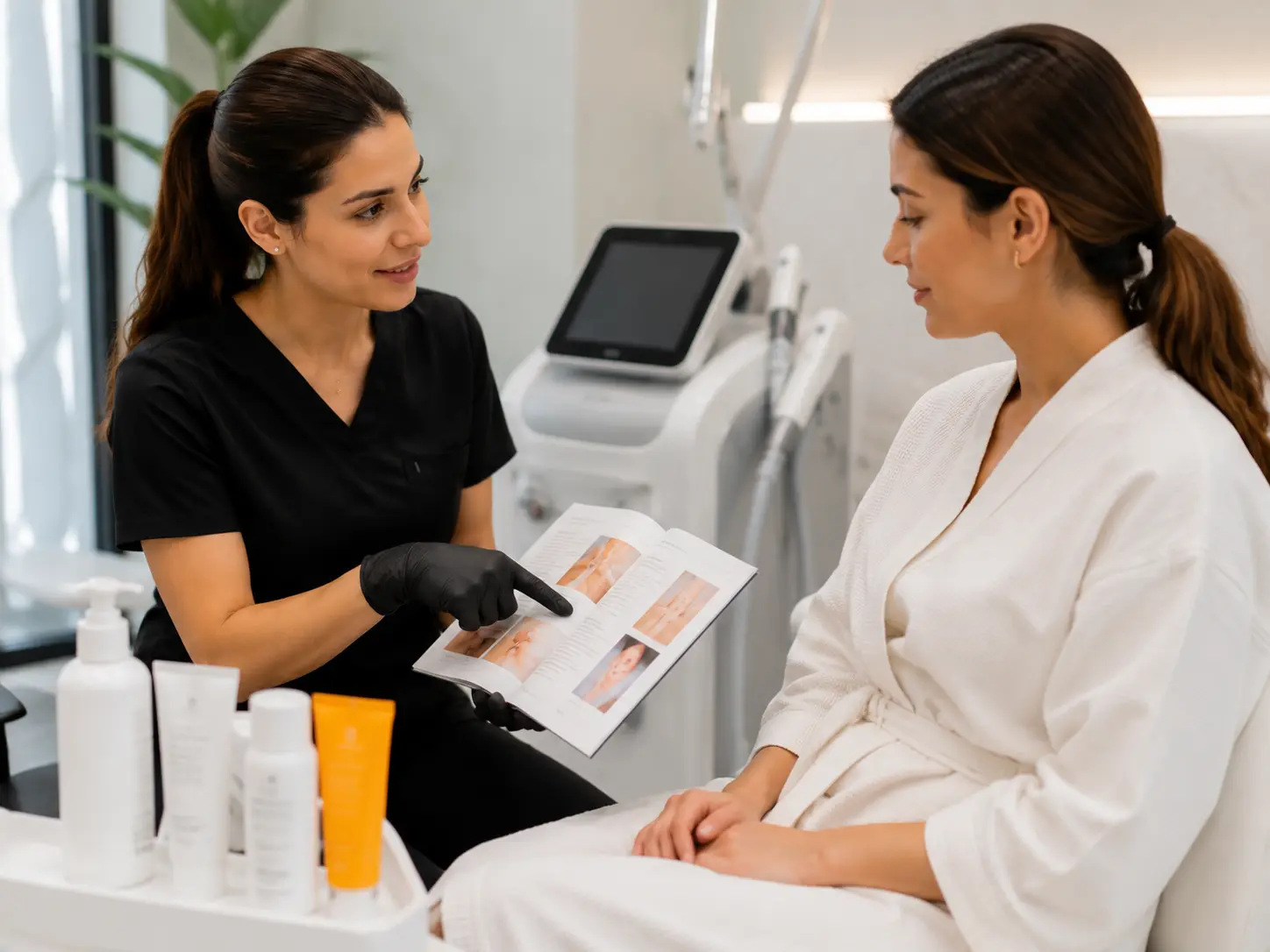
Laser hair removal uses selective photothermolysis to disable active hair follicles. The laser emits concentrated light wavelengths that dark hair pigment absorbs and converts into targeted thermal energy. This localized heat destroys the growth center of the follicle beneath the skin’s surface.
Because your skin absorbs a portion of this thermal energy during the procedure, the treated area requires gentle handling while it cools and heals. Skipping post-treatment care can lead to avoidable complications, such as prolonged redness, micro-blistering, or post-inflammatory hyperpigmentation (PIH). Following a structured aftercare plan ensures your skin recovers comfortably while maximizing the effectiveness of every session.
To explore our advanced cooling laser technologies and custom hair reduction protocols, visit the official Arizona MedLaser website.
Directly following your laser session, your skin will likely look and feel as though it has a mild sunburn. This response is completely normal and indicates that the laser successfully delivered heat to the targeted hair follicles.
To ensure your skin heals safely, avoid exposing the treated area to external heat sources, friction, or harsh chemicals during the initial recovery window.
According to clinical dermatology guidelines published by the American Academy of Dermatology, keeping skin cool and irritation-free immediately following energy-based treatments is essential for preventing adverse skin reactions.
Roughly 7 to 21 days after your appointment, you will notice treated hair rising to the surface and falling out. This process is frequently mistaken for new hair growth, but it is actually the disabled hair shaft being expelled by your skin.
| Action | Recommended Practice | Reason for Practice |
| Shaving | Allowed after 48 hours | Cuts hair at the surface without disturbing the healing follicle root. |
| Exfoliating | Gentle washcloth use after 5 days | Helps clear shedding hair shafts from pores smoothly. |
| Plucking / Tweezing | Strictly Avoided | Removes the hair root required as a laser target for your next visit. |
| Waxing / Sugaring | Strictly Avoided | Uproots hair follicles, rendering upcoming laser sessions ineffective. |
Sun protection remains the most important step throughout your entire laser hair removal course. UV exposure stimulates melanin production, which interferes with the laser’s ability to differentiate between your hair and surrounding skin tissue during subsequent visits.
Ensure smooth, beautiful results and a comfortable recovery by trusting your skin to the certified specialists at Arizona MedLaser. Schedule your consultation or follow-up visit today!
Yes! Shaving is the only approved method for managing hair growth between appointments. Because shaving leaves the hair root intact beneath the skin, it does not interfere with the laser’s ability to target the follicle during your next session.
Small red bumps around the hair follicles (follicular edema) are a common, temporary reaction to laser heat. Keep the area clean, avoid picking or scratching, apply pure aloe vera, and wear loose clothing. The bumps typically subside within 24 to 48 hours.
If you had facial hair removal, wait at least 24 hours before applying makeup, and choose mineral-based products when you resume. For underarm treatments, refrain from applying scented deodorant or antiperspirant for 24 to 48 hours to prevent irritation.
This is actually the shedding phase. The disabled hair shafts are slowly being pushed out of the hair follicles by your skin. You can gently buff the area with a soft washcloth in the shower to help these hairs slide out easily.
Sessions are generally scheduled 4 to 8 weeks apart, depending on the body zone being treated. Facial areas are usually spaced 4 to 6 weeks apart due to faster hair growth cycles, while body zones like legs or back are spaced 6 to 8 weeks apart.
We’re here to help. Schedule a consultation today to discuss treatment options.
We're here to help. Schedule a consultation today to discuss treatment options and look your very best.
Book Now
Copyright © 2026 All Rights Reserved Financing | Privacy Policy | HIPAA | Terms of Service