Quick Answer
Why are men choosing laser hair removal?
Men are choosing laser hair removal because it reduces unwanted hair on the back, chest, neck and face without daily shaving, ingrown hairs or painful waxing. It works on dark, coarse hair, usually takes a series of sessions spaced weeks apart, and delivers long-lasting reduction rather than a guarantee of permanence. It is not effective on gray, white or very light hair.
Not long ago, body hair removal was a quiet topic for men. Today it comes up at the gym, on the golf course and in the barbershop chair, and the question has shifted from “would you?” to “which areas?” The reasons are practical more than cosmetic: less time grooming, fewer razor bumps and more comfort in everything from a dress shirt to a swim trunk.
Here is why laser hair removal has caught on with men, what treatment actually involves and how to decide whether it is worth it for you.
Six Reasons Men Are Making the Switch
No more razor bumps and ingrown hairs
Men with coarse hair, especially along the neck and jawline, often deal with razor burn and ingrown hairs. Because laser treatment targets the follicle, hair grows back finer and sparser over time, which reduces how often you need to shave and how often that irritation shows up.
Hard-to-reach areas finally get handled
Nobody shaves their own back well. Laser hair removal clears broad areas like the back and shoulders in a way a razor, trimmer or wax strip never will, and larger spot sizes mean a full back can be treated relatively quickly.

It saves time
A morning shave, a weekly trim and a monthly appointment add up. After a series of sessions, many men find that maintenance drops to a few touch-ups.
Comfort and performance
Runners, cyclists, swimmers and lifters often cite comfort and a cleaner feel under compression clothing or in the water. There is less chafing, less itching as hair grows back and no stubble to manage between grooming days.
Control over how you look
Laser hair removal is not all or nothing. Many men choose to thin chest or abdominal hair for a neater look while keeping natural coverage, while others clear the back and neckline completely. A clean neckline can also keep a beard looking sharper between barber visits.
Low downtime and discretion
Most people return to normal activities right away, apart from avoiding sun and heat for a few days. There is no recovery period to explain at work.
Where Men Ask for Treatment Most
At our Scottsdale, Glendale and Chandler clinics, men most often request:
- Back and shoulders: our full back laser hair removal is among the most popular services for men
- Chest and abdomen: either thinned or cleared, depending on preference
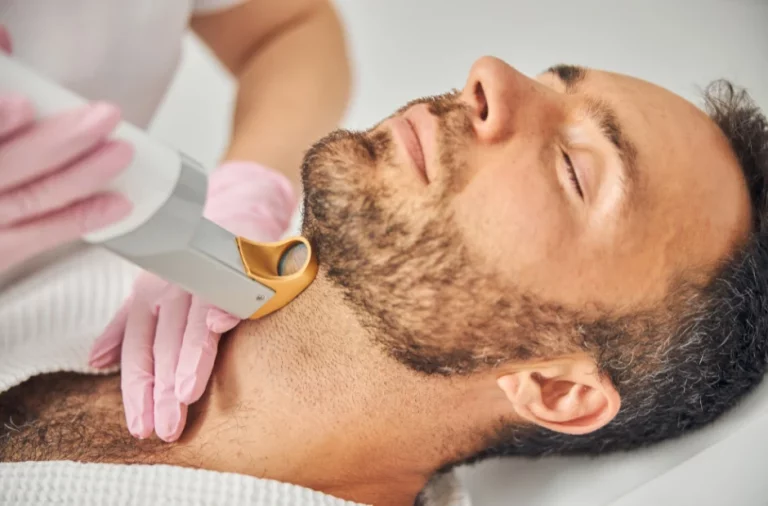
- Neckline: front and back, to prevent razor bumps and shape a beard line
- Arms and hands: for a more consistent look
- Face: to reduce beard density and make daily shaving easier
Our guide to the most requested laser hair removal areas for men walks through the choices in more detail.
What a Laser Hair Removal Series Involves
Hair grows in cycles, and a laser only affects follicles that are in the right phase when you are treated. That is why one session is never enough. The American Academy of Dermatology explains in its laser hair removal FAQs that most people need six to eight sessions, usually once every four to six weeks, and that a consultation evaluates your skin, hair color and coarseness first. Because male hair is typically coarser and hormonally influenced, some men need more sessions, and beard and neckline areas require careful settings to protect facial skin.
Our systems include built-in cooling to keep the skin surface comfortable, and many men describe the sensation as a brief snap or flick of warmth. Before treatment, shave the area, since the laser needs to find the follicle. Avoid waxing and plucking, which remove the follicle the laser needs, and skip tanning.
Who Gets the Best Results
Laser hair removal depends on pigment, so it works best on dark hair. It is not effective on gray, white or very light blond hair, and contrast between hair and skin generally speeds results. Modern lasers can treat a wide range of skin tones, but darker skin needs a provider with experience and careful settings.
Risks and Realistic Expectations
Side effects can include temporary redness, swelling, blistering, cold sore flare-ups and changes in skin color. The American Society of Plastic Surgeons shares a helpful list of things to know about permanent hair removal, including why “permanent” really means long-lasting reduction. Expect fewer, finer hairs rather than a guarantee that none will ever return, and plan for occasional maintenance.
Laser Compared With Shaving and Waxing
| Method | Upkeep | Irritation risk | Longevity |
|---|---|---|---|
| Shaving | Daily or every few days | Razor burn, ingrown hairs | Hair returns within a day or two |
| Waxing | Every few weeks | Pain, redness, ingrown hairs | Hair returns within weeks |
| Laser hair removal | A series, then occasional touch-ups | Temporary redness, rare side effects | Long-lasting reduction |
Common Myths About Men’s Laser Hair Removal
- “The hair will grow back thicker.” Laser treatment damages the follicle, so regrowth is typically finer and sparser, not thicker.
- “It is only for athletes.” Athletes often cite comfort, but most men choose it for convenience and skin comfort.
- “It hurts too much.” Sensations vary and cooling helps, and most men find it tolerable.
- “You have to go completely hairless.” Hair can be thinned instead of cleared, so you control how natural it looks.
- “It works on any hair color.” It does not. Gray, white and very light hair respond poorly.
Prep and Aftercare Basics
Before treatment, shave the area, skip waxing and tanning, and tell your provider about medications, recent sun exposure or a history of cold sores. Afterward, expect mild redness or a warm feeling, avoid hot showers, saunas and heavy sweating for a day or two, use a gentle fragrance-free moisturizer and wear sunscreen on treated areas. Treated hairs often shed over the following one to three weeks, which can look like stubble growing back, so do not pick, scratch or wax them away.
Laser Hair Removal for Men Questions, Answered
Does laser hair removal hurt?
Most men describe a brief snap or sting of heat that is tolerable, and built-in cooling helps. Sensitivity varies by area, with the neckline and face often feeling stronger than the back.
How many sessions will I need for my back?
It varies with hair density and growth cycles, but men commonly need six to ten sessions spaced about four to six weeks apart. Your provider will estimate a range after your consultation.
Will the hair grow back?
You should see fewer and finer hairs over time, but results are not guaranteed to be permanent. Some men return for occasional touch-ups.
Can men treat the beard area?
Yes. Many men treat the neckline or reduce beard density to make shaving easier, but facial treatment needs careful settings and a clear plan for the look you want.
Can I treat my chest and keep some hair?
Yes. Your provider can thin hair while leaving natural coverage, and you can always clear more later.
Ready for a Cleaner, Lower-Maintenance Routine?
If you are tired of fighting a razor, a consultation will tell you exactly what to expect for your hair, skin and goals. Our team will explain the number of sessions, map out your treatment areas and answer your questions. You can book a consultation at our Scottsdale, Glendale or Chandler location.
Ready to Get Started?
We’re here to help. Schedule a consultation today to discuss treatment options.